Typing is my business.
Carl Brown, of The Internet of Bugs, appeared on Ed Zitron’s podcast to discuss the failings of vibe coding, but even he admitted he found LLMs useful for some tasks, because—among other reasons—the AI can type faster than you can.
Upon hearing that, I was struck by two things. First, that it’s true. Compared to so many claims about what AI can and can’t do, this is one I have to, and will gladly, concede. Yes, an LLM can make words on the page faster than I can. Second, though, I also recognized a profound sense that typing isn’t something I want to get rid of.
I would never advocate for replacing the liberal arts with pure vocational training, but many of the most important classes of my middle and high school education were the eminently practical ones. And none were more practical than my 8th-grade Keyboarding course.
I assume they called it keyboarding because someone (erroneously) believed that it needed to be distinguished from the typewriter-oriented “Typing” course it had replaced. The year was 1993 and the scene was a lab full of classic Macintosh computers with black-and-white screens. The teacher was a veritable drill sergeant, barking commands and enacting strict discipline as we completed the most rote exercises of our middle school years. I was fortunate enough to have had access to computers at home, but I was (despite some furtive efforts by my parents) still an inveterate hunt-and-peck typist. That changed in Mr. Griggs’s class. The posture was stifling, the exercises were grueling, and the corrections were brutal. In that small-town school computer lab, I was born again hard. I was a touch typist.
A couple of retail jobs in my teen years polished my 10-key skills, and then in my early 20s, typing became my business. I got a job at a brokerage scanning paperwork and then doing data entry to annotate and route the images. Later, I got a job supervising a team doing the same, and then another after that, before talking my way into a project management role. In all, typing was my career for over twelve years.
I imagine data entry jobs like the ones I had barely exist anymore, between advances in computer vision (call it “AI” or not) and the ability to send the images overseas via the internet to be processed by less expensive human labor. Certainly, things were trending towards optical character recognition and automation when I left the field behind; the teams I oversaw were being asked to take on ever more challenging “value-added” work, requiring more close reading, classification, and analysis. But the bulk of the work was, basically, typing. Often mindless enough that I could maintain good speed and accuracy for hours while listening to podcasts or audiobooks.
My data entry roles (which, to be clear, also always entailed handling, scanning, and boxing up endless bankers’ boxes of paperwork) were the most blue-collar of the white-collar jobs I’ve had. I know the difference, of course—in my twenties, I was also an office cleaner, worked on a factory floor, and drove a forklift. But all this is to say I don’t pine to go back to data entry, even if it was an option.
But I did carry something away from those jobs, something that sets me apart from some of my colleagues: I love to type.
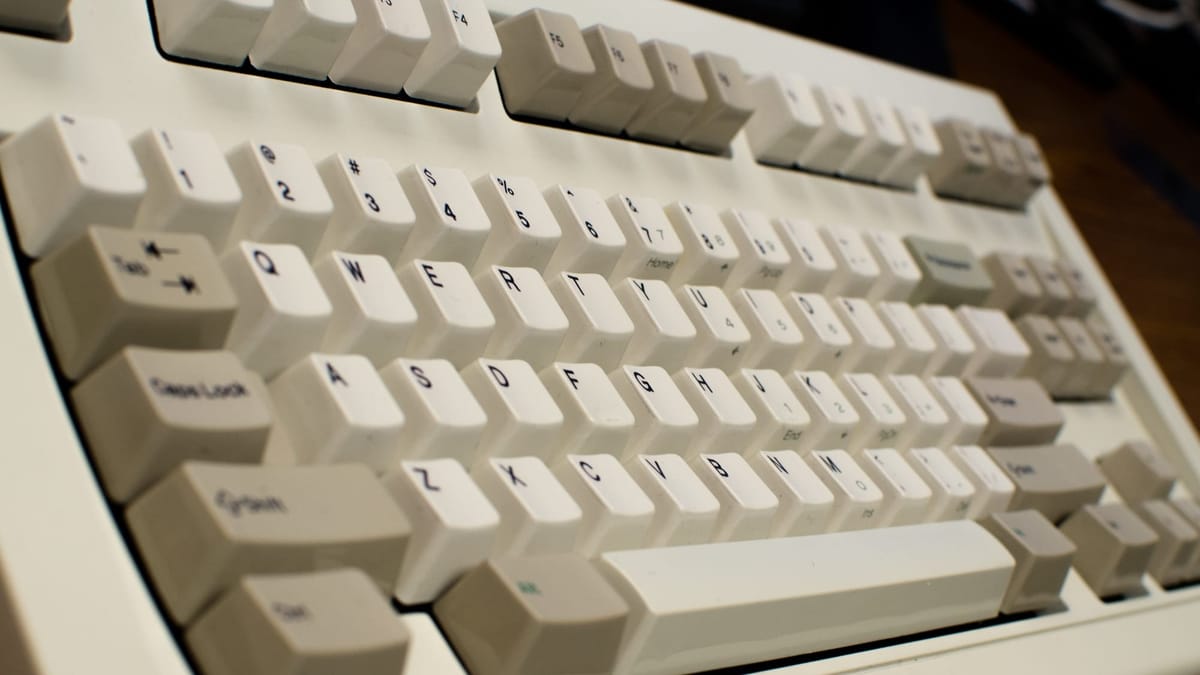
I love the sound and feel of a good keyboard. Hell, I love typing on an adequate keyboard. Because of the vagaries of my weird job and techy hobbies, I touch ten different keyboards over the course of a week. They range from the flat-and-thin Surface Pro Type Cover to a clicky mechanical Logitech with Cherry MX switches; from the deafening clack of my Unicomp Model M to the nearly-silent squishy keys of the Incase Wired Desktop 600; from the Apple MacBook Air to an HP corporate fleet machine whose model name I just checked and already forgot in the course of typing this sentence. I type on a dizzying array of keyboards and I love using them all, with the possible exception of a Lenovo I have for work. Among other sins, it has the effin’ FN key in the wrong place.
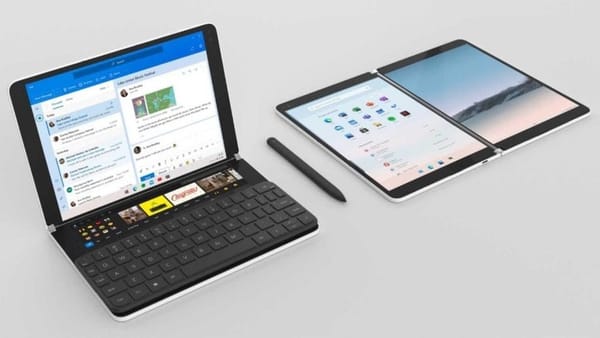
I don’t mind other forms of text input. As I type these words, I am not only sitting in an office with seven of the aforementioned ten keyboards, but also three different devices with styluses. Every laptop, tablet, and phone in the house can take voice input. But given my druthers, I would rather type. And type on a full keyboard, at that. I can type with my thumbs (though if you look at the edit history of my posts on Mastodon, this is debatable). However, even just to text my wife, I will put up with Microsoft’s buggy PhoneLink application on my Surface or use my weird Universal Foldable Keyboard if either one is in reach.
I get the sense for many, even many whose job entails writing or coding or doing some other sort of input, that typing is a barrier. At best, it's an incidental part of the process. It is a necessary but annoying interface between brain and computer, between intent and outcome. And this is understandable—it is physical labor, after all, and it takes time. A person who can type 40 to 60 words a minute can usually speak 150, which suggests thinking easily outpaces typing.
But I love that labor, the act itself. I find it pleasurable. Relaxing. I don’t ever sit down just to type for typing’s sake (although reading these essays, you may feel differently). However, when I was finishing up my degree in 2020, I discovered that if I was procrastinating starting an assignment, just opening up a web page of classic Lorem ipsum text and typing it into my document for a few minutes would put me in the right frame of mind to start working for real.
There’s something about these modern careers of emails and spreadsheets and group chats and Zoom calls that is decidedly noncorporeal. Even as digital storage and the cloud make saving everything possible, it all seems unreal, ephemeral. I don’t print or mail or handle much physical material anymore. Maybe that’s part of the appeal of typing—as I pound the keys, annoying my officemates with the 1980s racket of my Model M, I am doing something physical as well as digital.
And that's why, even though it’s no longer my job, typing is still my business. And you can pry the keyboard out of my cold, dead hands.